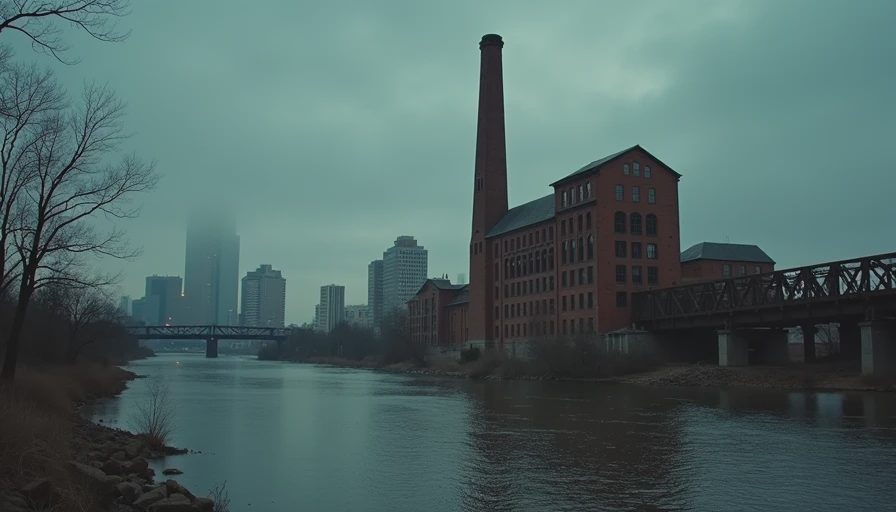
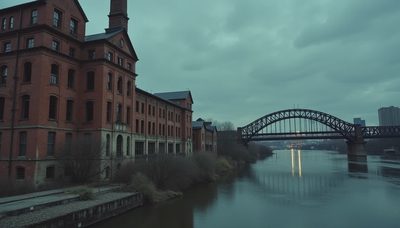
The path along the river still carries the outline of the mills. The buildings that remain have been repurposed or left as fragments. The scale of what used to operate here is visible even in absence. Walking through it makes the current conversation about automation feel less abstract.
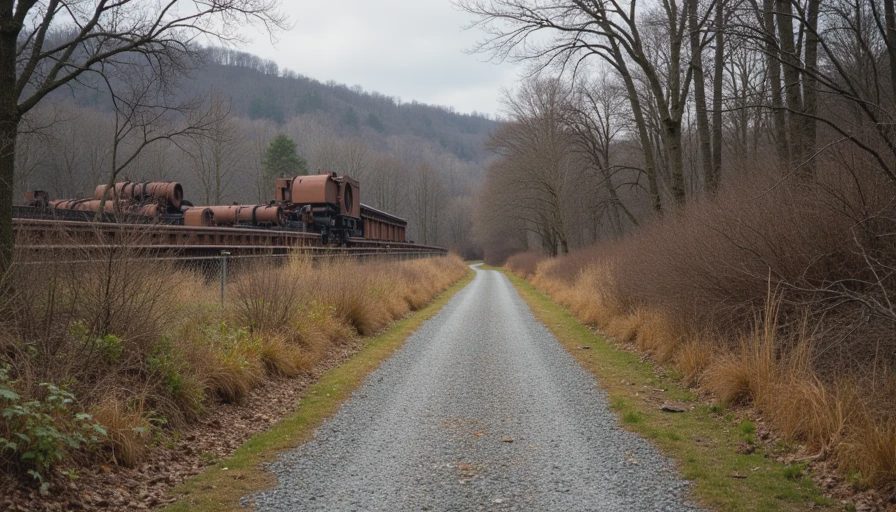
The Landscape That Remains
What the Ground Still Shows
In the old mill districts the riverfront is quieter now. Some stretches have become trails and parks. Others hold light industry, storage, or the early stages of new development. The massive structures that once defined the skyline are mostly gone, yet the streets, the rail alignments, and the sudden open spaces still record the earlier arrangement of work. A person can walk the same ground and see both the erasure and the persistence.
The Human Scale of the Transition
The people who worked in these mills did not experience the decline as a single technological event. They experienced it as successive changes in tasks, in hiring, in the value of particular skills, and in the viability of entire neighborhoods. Some adapted inside the remaining industrial work. Some left. Some stayed and found different livelihoods as the city’s economic base shifted. The process took decades, not quarters.
Automation as Continuity, Not Rupture
Earlier Machines and the Same Questions
The mills themselves were already systems of automation relative to the hand work that preceded them. Mechanized rolling, continuous processes, and the coordination of large capital and large labor forces were technological achievements of their time. When later waves of automation and global competition arrived, the questions that surfaced were familiar: which tasks would remain, who would be trained for the new ones, and what obligations the institutions that had benefited from the earlier arrangement still carried.
The Pattern That Repeats
Each major technological shift in the region rearranged work more than it eliminated the need for it. The content of the jobs changed. The location of the jobs changed. The bargaining power of different groups of workers changed. What did not change was the necessity of human judgment in the remaining tasks and the social consequences when large numbers of people had to move from one economic role to another without adequate support.
What the Current Wave Looks Like From Here
Tasks, Not Entire Occupations
The AI systems now entering offices, warehouses, and professional workflows are most often altering specific tasks inside existing jobs rather than deleting the jobs wholesale. Document drafting, routine analysis, customer routing, and certain forms of monitoring are being accelerated or partially automated. The worker is still present, but the mix of responsibilities is shifting. This is closer to the historical pattern visible in the mill districts than to the more dramatic forecasts that treat entire occupations as suddenly obsolete.
The Institutional Question
The harder problem is not the technical capability of the new tools. It is the capacity of companies, schools, unions, and local governments to manage the reassignment of tasks in a way that does not simply transfer the cost of adjustment onto the people least able to absorb it. Pittsburgh’s industrial history supplies examples of both relatively managed transitions and transitions that left lasting damage. The difference was rarely the technology itself. It was the presence or absence of institutions willing to treat the workforce as more than a temporary input.
Walking and the Longer View
Why the Physical Place Matters
Reading about automation from a distance encourages abstraction. Walking the ground where an earlier form of industrial work rose and receded makes the human timeline harder to ignore. The empty lots and the reused buildings are not metaphors. They are the residue of decisions about capital, labor, and technology that were made under pressure and with incomplete foresight. The same pressures exist now.
A Useful Distance From the Centers of Hype
Silicon Valley and the major coastal media markets tend to frame each new model release as a potential historical break. From the old mill districts the frame is different. Technological change is real and consequential, yet it arrives inside cities and labor markets that already carry the marks of previous changes. The useful posture is neither denial nor permanent astonishment. It is attention to the concrete mechanisms of adjustment: which skills are rising in value, which supports are actually available, and who is writing the rules that govern the new tools.

What the District Suggests About the Present
Continuity of the Core Problem
The core problem has not changed. New productive capacity is created. The benefits and the disruptions are distributed unevenly. The political and institutional response determines whether the disruption remains temporary or becomes structural. AI does not invent this problem. It reopens it under new technical conditions.
The Limits of Prediction
Standing in a place that has already lived through one long industrial transition is a reminder of how poorly the early forecasts aged. Some expected outcomes arrived. Many did not. The work that remained was often different from the work that had been imagined. The same humility is available now. The systems will improve. The tasks will shift. The precise shape of the resulting labor market will be settled by decisions that have not yet been made.
The old mill district does not offer a simple lesson. It offers a longer memory. Automation is not new here. The question of how a city and its people absorb it is not new either. The facts of the current technology are still being established. The inferences about its effects on work remain provisional. The judgments about responsibility and adaptation belong to the institutions and the citizens who will have to live with the results.
The facts end here. The inference ends here. The judgment is yours.
No letters yet — pray write the first.