
I started this site because the loudest voices in AI rarely sound like the places most of us actually live.
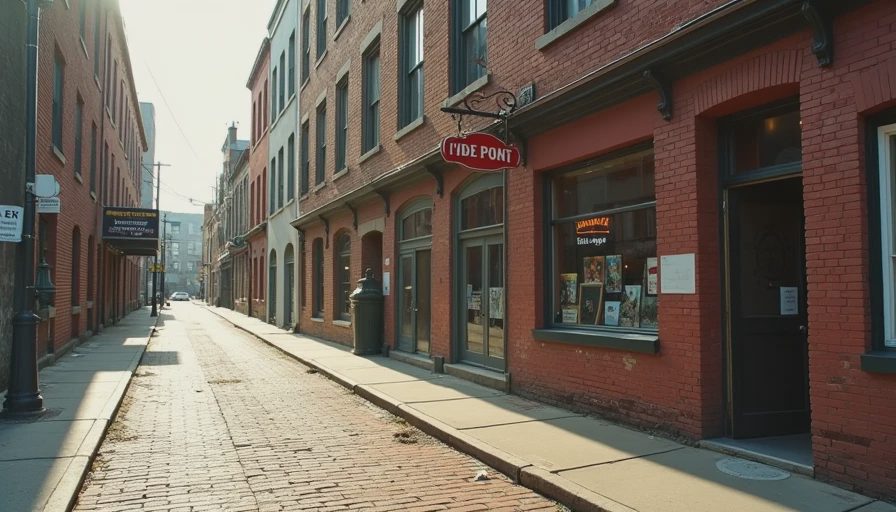
A Walk That Kept Returning
On a gray afternoon last fall I crossed the Roberto Clemente Bridge and kept walking into the North Side. The old mill sites have been reworked into offices, apartments, and quiet stretches of riverfront path. A few blocks inland the houses still show the layered history of successive industries: steel, then something else, then something else again. I had my notebook. I was thinking about a product announcement I had just finished reading—another model, another claim of capability, another round of funding large enough to make the previous round look modest.
The announcement was competent. The coverage that followed was mostly competent too. What was missing was the distance that lets a reader ask a slower question: what, exactly, changed for anyone who does not work inside the companies making the announcements?
Pittsburgh is useful for that question. It is close enough to real technological work—Carnegie Mellon, robotics labs, manufacturers still figuring out how machines and people share a floor—to keep the conversation honest. It is far enough from the centers of venture capital and media attention that the daily pressure to treat every launch as civilization-scale news is lower. The city has already lived through one long industrial transition. The scars and the adaptations are still visible if you walk slowly enough.
What the Usual Coverage Leaves Out
Most AI reporting does one of two things well. It either tracks the announcements with reasonable accuracy or it translates them into urgency for an audience already primed to feel urgency. Both modes have value. Neither is enough for the reader who is not paid to stay inside the cycle.
That reader is an ordinary professional—manager, teacher, independent contractor, public employee, small-business owner—who keeps seeing AI appear in the tools they use, the job descriptions they answer, and the policy debates that eventually reach their city. They do not need another breathless summary of what a company claims its model can do. They need a clearer separation between what has been demonstrated, what has been asserted, and what remains unknown. They also need the development placed against something more durable than the last funding round: labor history, urban change, the way previous technologies rearranged work without erasing the need for judgment.
I spent years as a technology editor doing the first kind of work—interviews, source checks, product analysis, the daily discipline of distinguishing a press release from a fact. Useful work. Over time I became less interested in repeating the loudest claim and more interested in the gap between the claim and the ordinary consequences. That gap is where this site lives.
The Pittsburgh Advantage
Distance is not the same as ignorance. Living here means I still talk to people who build and use these systems. It also means I talk to people whose daily work is being quietly reshaped by them and who have no incentive to sound either utopian or apocalyptic. The industrial history of the region supplies a long memory that Silicon Valley, for all its strengths, does not automatically possess. When a new technology arrives promising to change everything, it helps to remember that earlier technologies also promised to change everything and then settled into more complicated patterns of reassignment, displacement, and adaptation.
I walk the same neighborhoods repeatedly. The bridges, the hills, the old mill districts, the streets that have been rebuilt more than once. The notebook fills with overheard phrases, street details, and the occasional sentence that later becomes the opening of an article. The method is deliberate: begin with something concrete and local, then connect it carefully to the larger industry question. The goal is not nostalgia. It is perspective.
How the Writing Will Work
Every piece on this site will try to keep three layers visible:
Verified facts. What can be checked against primary documents, named sources, or direct statements.
Evidence-based inference. The reasoned step beyond the confirmed record.
Judgment. My own editorial view, labeled as such, and left open for the reader to accept, reject, or revise.
I will not present rumors as established facts. I will not write corporate public relations or undisclosed promotional copy. I will not treat the size of a funding round as proof of a durable business. I will not claim that AI is about to replace everyone; the more useful conversation is about which tasks are changing, who decides how the new tools are used, and what institutions are responsible for the transition.
The categories reflect the same priorities. Some pieces will examine the week’s announcements and separate what was actually said from what was inferred. Others will look at how the tools are already altering ordinary workplaces. Still others will follow the money and the infrastructure. And some will stay close to the sidewalks and the longer historical patterns that make the current moment less unprecedented than it sometimes feels.
Why Not From Inside the Bubble

There is nothing wrong with reporting from San Francisco or New York. Those cities contain essential sources and real expertise. The limitation is structural. When the same cluster of companies, investors, and media organizations set the daily agenda, the questions that feel urgent inside the cluster begin to feel like the only questions worth asking. Readers outside the cluster are left with either overheated summaries or the sense that the entire conversation is happening somewhere else.
I am writing from somewhere else on purpose. The vantage point is not superior; it is simply different. Pittsburgh keeps the industrial past visible. The university and the robotics firms keep the technical present visible. The neighborhoods keep the human scale visible. That combination is the reason this blog exists.
The facts end here. The inference ends here. The judgment is yours.
No letters yet — pray write the first.