
Carnegie Mellon sits on the eastern edge of Pittsburgh’s Oakland neighborhood, a short walk from the libraries and the older campus buildings that still feel like part of the city’s industrial inheritance. Robotics laboratories and AI research groups operate a few blocks from streets that once served the mills. The proximity is not symbolic decoration. It is a working fact about where certain kinds of technical progress are defined and who is invited to participate in the definition.
The Institutional Concentration of Authority
Where the Technical Agenda Is Set
Major research universities and the corporate labs that hire from them shape the problems that are considered worth solving. Funding priorities, benchmark design, conference culture, and the career incentives of graduate students and faculty all influence which capabilities are pursued and which are treated as peripheral. CMU is one of the places where those decisions are made with unusual density. The work is rigorous. It is also situated inside a particular set of institutional rewards.
The Quiet Power of Problem Selection
Progress is not only a matter of solving hard technical questions. It is also a matter of deciding which questions count as the important ones. A research program that prioritizes performance on standardized tests, efficiency of large models, or autonomy in controlled environments will produce different systems than a program that prioritizes robustness in messy physical settings, transparency for non-expert users, or compatibility with existing labor practices. The choice of emphasis is rarely put to a public vote. It is made by the people who control the grants, the labs, and the publication venues.
Robotics as a Local Case
The Pittsburgh Advantage in Physical Systems
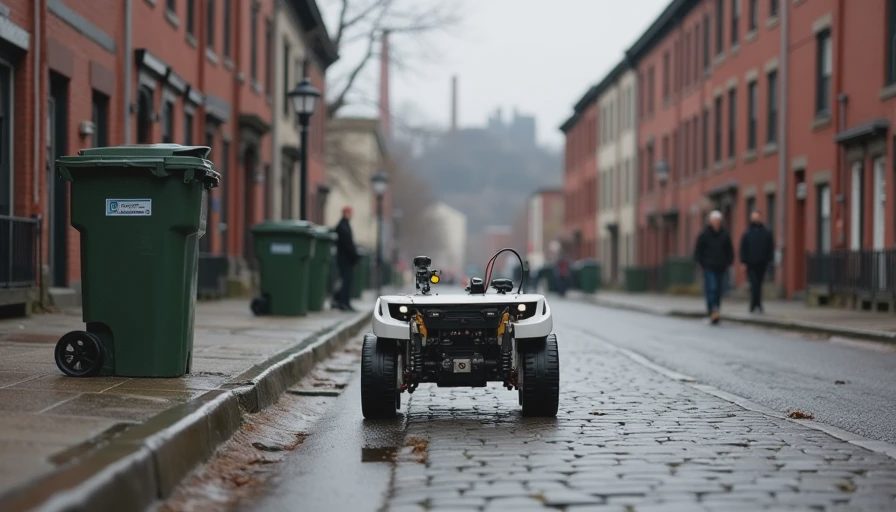
The region’s combination of university research, remaining manufacturing knowledge, and a landscape still marked by industrial infrastructure has made it a durable center for robotics. Autonomous vehicles, manipulation systems, and field robots have all been developed here under conditions that include real weather, real terrain, and real constraints of cost and safety. That grounding is a strength. It keeps certain fantasies about frictionless autonomy in check.
Who Evaluates Success
Even in robotics, the definition of a successful demonstration often remains internal to the research and development community. A system that navigates a test course or completes a scripted warehouse task is judged by metrics the developers have agreed upon. The warehouse workers, the delivery recipients, or the municipal officials who will later live with the deployed version are rarely present at the moment the success criteria are written. Their absence does not make the technical achievement less real. It does make the achievement incomplete as a measure of social progress.
The Broader Pattern in AI
Capability First, Context Later
Much of the public conversation about large models follows the same sequence: a new capability is demonstrated, the demonstration is accepted as progress, and only afterward are the questions of integration, labor impact, and institutional readiness addressed. The sequence privileges the people who build and fund the systems. It places everyone else in the position of reacting to facts already established on someone else’s terms.
The Language of Inevitability
When technical communities describe their results as steps along a single path of progress, alternative paths become harder to see. Different choices about what to optimize—energy cost, ease of human oversight, preservation of skilled trades, geographic distribution of benefits—recede from view. The claim of inevitability is itself an exercise of definitional power. It treats one research trajectory as the future and other possible trajectories as nostalgia or delay.
Distance and Participation
What Pittsburgh Makes Visible
Living in a city that contains both a major robotics institute and the physical residue of earlier industrial transitions offers a daily reminder that technical progress and social outcomes are not the same object. The same region that produces advanced autonomous systems also contains neighborhoods still navigating the long aftermath of previous rounds of automation and capital flight. The contrast does not argue against the research. It argues against allowing the research community to be the sole narrator of what the research means.
Expanding the Set of Definers
Progress that will reshape workplaces, cities, and public services cannot be defined only by the institutions that produce the underlying technology. Workers who will use or be displaced by the systems, city governments that will regulate their physical presence, educators who must prepare the next generation, and communities that will absorb the externalities all have standing to shape the criteria. Their inclusion is not a matter of courtesy. It is a practical requirement for systems that are supposed to function outside the laboratory.
Practical Shifts in Definition
Metrics That Include Downstream Effects
Research and development organizations can choose to treat deployment conditions, failure modes in real environments, and impacts on existing job quality as part of the evaluation of progress rather than as later policy problems. Doing so changes what counts as a finished result.
Funding That Rewards Different Questions
Public and philanthropic funders can attach weight to projects that prioritize inspectability, energy discipline, or compatibility with human oversight even when those projects score less dramatically on pure capability benchmarks. The allocation of money is one of the clearest ways to redefine what progress looks like.
Local Knowledge as a Design Input
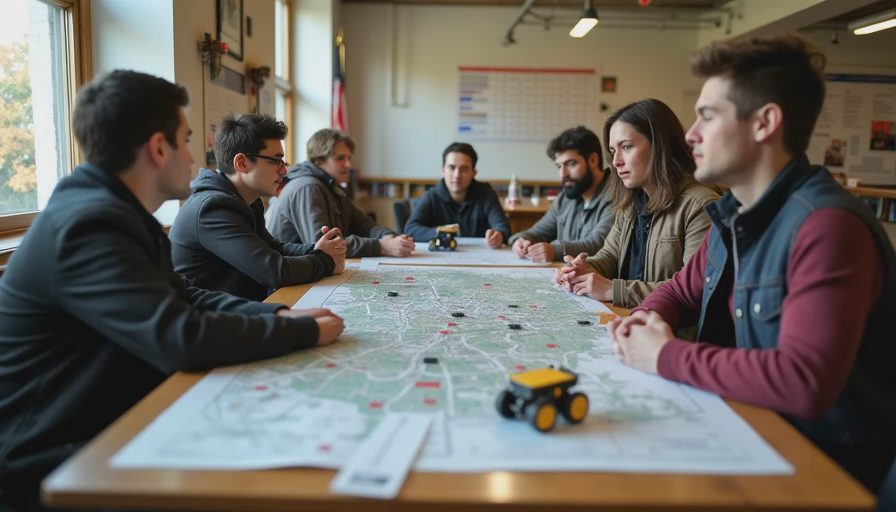
Cities and regions that host advanced research have an opportunity to insist that local labor, infrastructure, and historical experience inform the goals of the work. Pittsburgh’s combination of technical capacity and industrial memory makes it a plausible place for that insistence. Whether the opportunity is taken remains an open institutional choice.
CMU and the robotics labs around it produce real technical advances. Those advances become “progress” in the fuller sense only when the criteria for success are not written exclusively by the people who stand to gain most directly from the next demonstration. The facts of the research are established in the labs. The inference that laboratory success equals social improvement is optional. The judgment about who belongs in the conversation that defines the terms belongs to a wider set of parties than the one that currently holds the floor.
The facts end here. The inference ends here. The judgment is yours.





No letters yet — pray write the first.