
Pittsburgh has lived through enough technological transitions that the current one does not feel like the first rewriting of the rules. It feels like the latest chapter in a longer record of machines, capital, and people adjusting to one another under pressure. Watching it unfold from here supplies a particular discipline: the discipline of noticing what is actually changing while refusing to pretend the ending is already known.
The City as a Working Archive
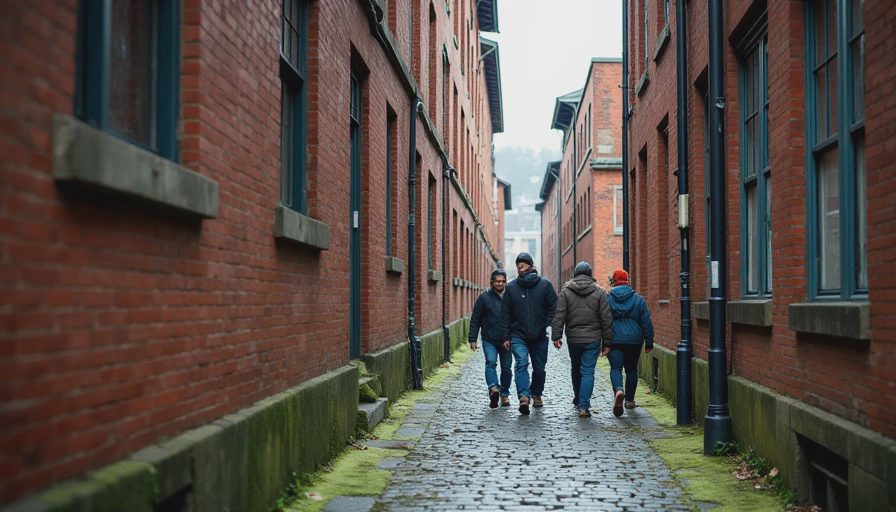
Layers That Remain Visible
Walk the old industrial corridors and the evidence of earlier shifts is still underfoot. Rail alignments, reused mill buildings, neighborhoods that expanded with one economic order and contracted with the next. The physical residue does not dictate the future. It does remind a careful observer that large technical systems arrive inside places that already carry memory, infrastructure, and unresolved obligations.
Institutions That Outlast Cycles
Universities, hospitals, remaining manufacturers, municipal governments, and the informal networks of people who stay through successive waves form a kind of continuity. They absorb new tools at different speeds and with different degrees of leverage. The same city that hosts advanced robotics research also hosts the ordinary work of teaching, nursing, driving, and maintaining the built environment. Both layers are real. Neither speaks for the whole.
What Can Be Observed From the Sidewalk
Task Changes Before Job Titles Change
The most reliable early signals appear in the daily composition of work rather than in formal announcements of transformation. Documentation takes less time. Certain forms of analysis arrive pre-structured. Monitoring systems grow more granular. The job title on the door often remains the same while the mix of responsibilities inside the door shifts. Noticing the task-level change is more useful than waiting for the occupational census to catch up.
Uneven Absorption Across Neighborhoods and Sectors
New tools do not land evenly. Knowledge-work corridors adopt them quickly. Public services and regulated trades move more slowly. Some districts feel the pressure of rising productivity expectations; others feel the quieter pressure of being left outside the newest productivity gains. The city does not experience a single AI transition. It experiences several, separated by industry, income, and institutional capacity.
The Limits of the View From Here
Local Detail Is Not Universal Pattern
Pittsburgh’s combination of research strength, industrial history, and modest size makes certain dynamics easier to see. It does not make the city a perfect proxy for every other place. Coastal technology centers, manufacturing regions with different union histories, and cities whose economic base never included heavy industry will surface different versions of the same underlying tensions. The local vantage is clarifying, not comprehensive.
Observation Is Not Prediction
A person can walk the same routes for years, talk to people whose work is changing, and still not know how the larger adjustment will distribute benefits and costs. The historical record shows that technology reassigns work more reliably than it eliminates the need for work. It also shows that the human consequences depend heavily on decisions that are still open: training systems, bargaining power, public investment, and the willingness of institutions to treat adaptation as a shared problem rather than a private burden.
A Method for Watching Without Being Swept Away
Separate the Demonstrated From the Projected
When a new system is announced or deployed, the first task is to identify what has actually been shown to work under real conditions. The second is to identify what is still aspiration or marketing. Keeping the two categories distinct prevents the city’s conversation from being set entirely by the most dramatic claims arriving from elsewhere.
Follow the Incentives, Not Only the Capabilities
The same technical capacity produces different outcomes under different performance metrics and different distributions of power. Where speed is rewarded above verification, the tools intensify pressure. Where accountability and quality remain central, the tools are subordinated to existing professional standards. The incentive structure is often a better guide to the near-term future than the benchmark scores.
Leave Room for Judgment
No amount of local observation removes the need for judgment about what ought to be protected, accelerated, or resisted. The facts of technical change can be established with care. The inferences about their meaning can be drawn with equal care. The final evaluation of what a city and its people owe one another in the face of those changes remains a matter of choice.

Closing the First Sequence
This site began with the premise that distance from the loudest centers of AI development could be a form of clarity rather than a form of exile. The streets, the older industrial landscape, and the daily experience of a city that has already been reorganized by earlier machines supply that distance. They also supply a standing warning against treating any single technical wave as the end of history.
The work of watching continues. New systems will appear. New claims will be made. Some of the claims will be supported by evidence; many will not. The useful posture remains the same: establish what is known, separate it from what is inferred, and refuse to surrender the final act of judgment to the people who benefit most from sounding certain.
The facts end here. The inference ends here. The judgment is yours.



No letters yet — pray write the first.