On a gray morning in Pittsburgh, the old mill districts offer a useful way to read manufacturing AI news. The buildings still suggest a world of furnaces, shift whistles, and physical repetition, even as modern factories add cameras, sensors, robots, and software to the production line. The important question is not whether artificial intelligence sounds impressive. It is what changes on the floor, in the maintenance office, and in the lives of people whose work is connected to both.
This is the approach I take when following manufacturing AI news: separate the confirmed announcement from the sales pitch, then ask which task has actually changed. A new model, factory partnership, or funding round can matter. None of those facts, alone, proves that a plant is more productive or that an occupation is disappearing.
What counts as manufacturing AI news?
The phrase covers several different developments that are often blended together. One category is computer vision: cameras inspect parts for scratches, incorrect assembly, or dimensional problems. Another is predictive maintenance, where software studies vibration, temperature, or operating history to flag equipment that could fail. Generative AI is entering engineering documentation, troubleshooting systems, training materials, and natural-language interfaces for industrial software.
Robotics belongs in the conversation, but a robot is not automatically an AI system. Some machines repeat a fixed sequence with remarkable accuracy. Others use machine learning to identify objects, adjust a grasp, or navigate a changing workspace. The distinction matters because a press release describing an “intelligent factory” may refer to a modest software upgrade rather than a general-purpose machine capable of handling every task.
When reading manufacturing AI news, I look for evidence about deployment. Is the system running in a real plant or only in a demonstration? Does it operate on one production line or across many sites? Who checks its decisions? Those questions are less glamorous than a launch video, but they are usually more informative.
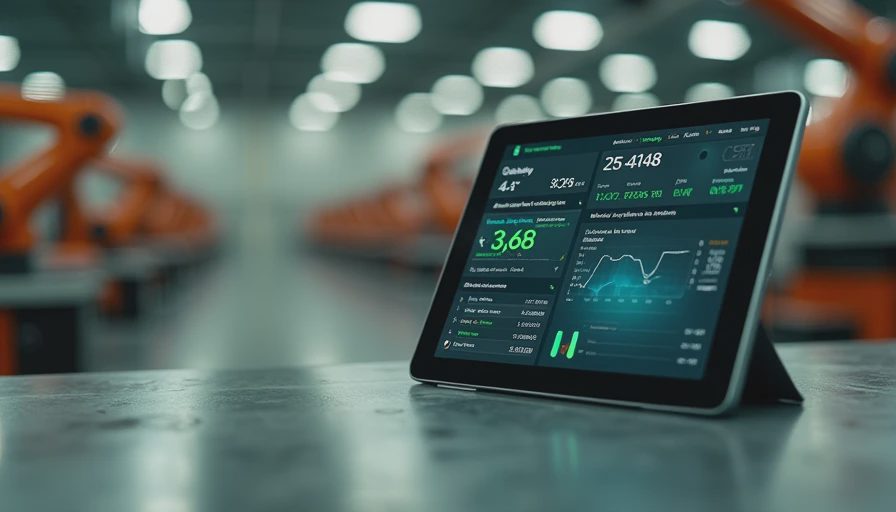
The factory floor is where claims meet friction
Manufacturing is an unusually demanding environment for AI. Dust, glare, vibration, inconsistent parts, old equipment, and changing production schedules can all reduce system performance. A model trained on clean images in a laboratory may struggle when a camera lens becomes dirty or a supplier changes the finish of a component.
That is why many practical deployments begin with narrow problems. A vision system might inspect one weld. A forecasting tool might help schedule spare parts. A language assistant might help a technician locate a procedure in a large maintenance archive. These applications can save time without pretending to understand the entire factory.
The economics also require care. A company must pay for sensors, network connections, integration work, cybersecurity, software licenses, employee training, and ongoing maintenance. A pilot costing $50,000 can become a much larger project when a manufacturer tries to connect it to enterprise resource planning systems and equipment from several decades. The potential benefit is real, but the invoice is real too.
The most credible manufacturing AI news usually includes a baseline. Readers should want to know whether scrap fell, inspection became faster, downtime declined, or workers received more useful information. “AI-powered” is a description of a tool, not proof of an outcome.
What changes for workers?
The immediate effect of industrial AI is more likely to be task redistribution than instant job elimination. An inspector may spend less time looking at routine images and more time investigating unusual defects. A maintenance technician may receive a ranked list of likely causes before opening a machine. An engineer may use software to compare designs, while still deciding which constraints matter in the real world.
This can improve work, but it can also increase pressure. If a system makes inspection faster, managers may raise the expected production rate. If software drafts reports, an employee may be expected to supervise more cases with no additional time. The same tool can remove drudgery and intensify the remaining job.
For workers, the useful skills are not limited to programming. Understanding process quality, safety, equipment behavior, and data limitations becomes more valuable. A person who knows when a sensor reading is impossible may protect a company from an expensive mistake. Community colleges, unions, employers, and technical schools all have a role in making that knowledge recognized and portable.
This is one reason manufacturing AI news should be read as labor news as well as technology news. The central issue is not whether a machine has a clever label. It is who receives the productivity gain, who carries the risk, and who gets time to learn the new system.
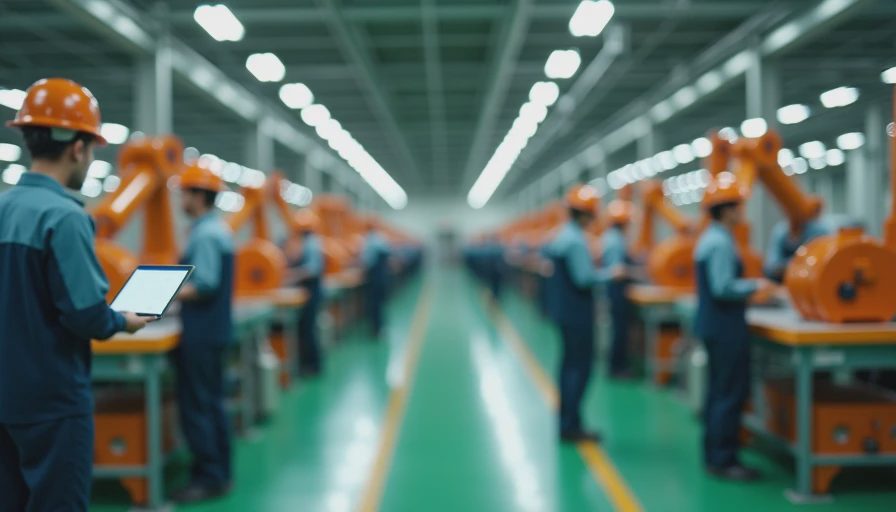
Why funding and policy deserve skepticism
Large investment announcements attract attention because they provide a simple story: money enters, factories modernize, and national competitiveness improves. Reality is slower. Capital can fund useful equipment, but it can also support ambitious plans that have not yet survived ordinary production conditions. Funding size is evidence of investor confidence, not evidence that a business model works.
Government policy adds another layer. Tax credits, domestic manufacturing incentives, workforce grants, export controls, and safety rules can influence where companies build facilities and which systems they purchase. Yet a policy announcement may take years to affect a local employer. Readers should distinguish an announced project from a completed plant and a completed plant from a fully staffed operation.
When following manufacturing AI news, I also watch for who is absent. Are frontline employees involved in testing? Are smaller suppliers able to afford the required software? Does the system work with older machinery, or does it reward only companies able to rebuild an entire facility? Industrial change spreads unevenly, and averages can conceal that unevenness.
A practical way to read the next headline
Start by identifying the claim in one sentence. Then ask what kind of evidence supports it. A customer announcement is not the same as independently measured performance. A prototype is not a product. A productivity estimate based on a small trial is not a guarantee for every plant.
Next, find the human workflow. Who uses the system each day? What happens when it is wrong? Is there a manual fallback? If a camera rejects a good component, does a person review it, or does the part move automatically into a costly rework process? These details reveal the real operating risk.
Finally, follow the timeline. Manufacturing equipment often remains in service for years, and procurement moves more slowly than software marketing. A credible story should explain installation, training, maintenance, and evaluation rather than jumping from announcement to revolution.
The facts, the inference, and the judgment
The facts are straightforward: manufacturers are adopting more sensors, robotics, computer vision, forecasting tools, and software assistants. Some applications already address narrow, expensive problems such as defects and unplanned downtime. Others remain pilots, demonstrations, or promises waiting for operational evidence.
The inference is that industrial AI will probably change the shape of many jobs before it eliminates whole categories of work. It may make experienced judgment more important in some settings while reducing the value of routine observation in others. The distribution of benefits will depend on management choices, training, bargaining power, and local investment—not only on model quality.
My judgment is that the best manufacturing AI news is rarely the loudest. Look for the plant, the workflow, the baseline, and the people responsible when the system fails. That is where the future becomes tangible. The facts end here. The inference ends here. The judgment is yours.





No letters yet — pray write the first.